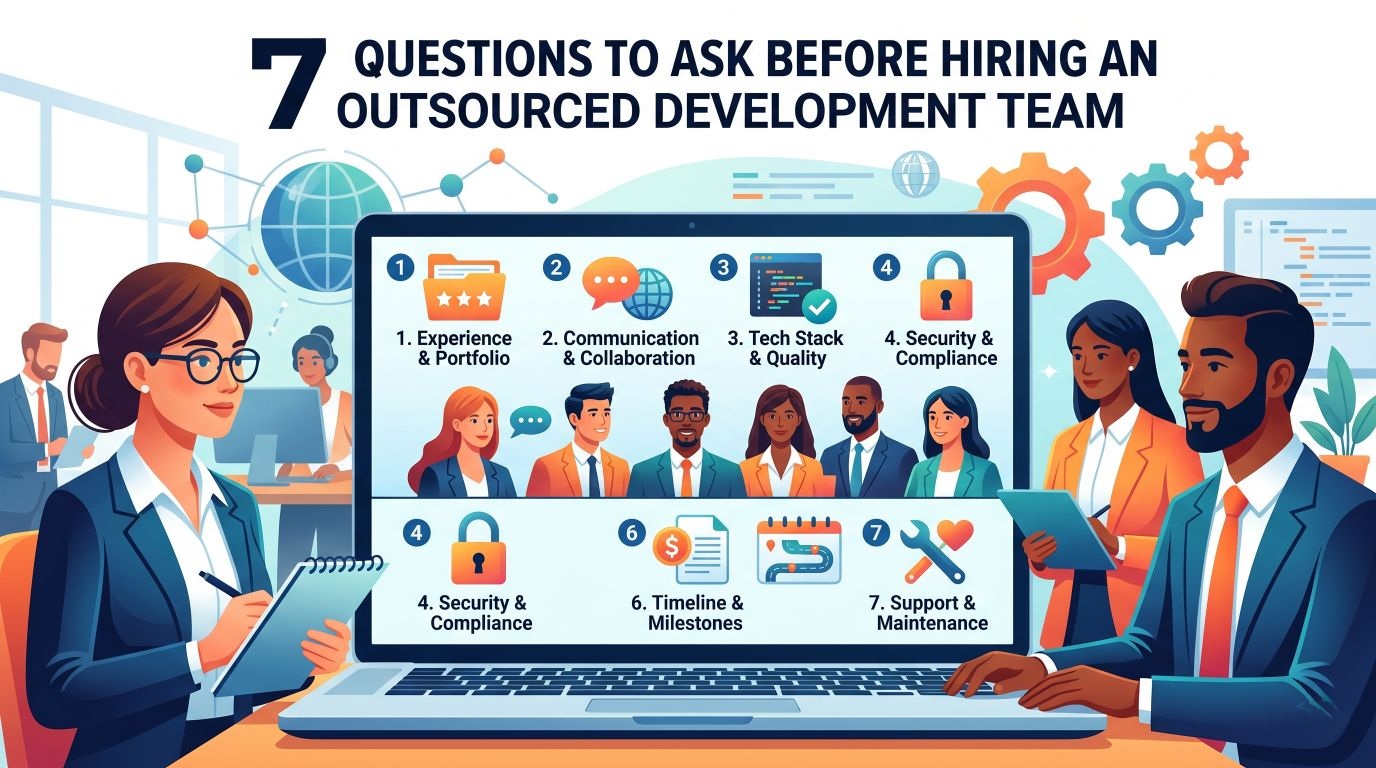
Most outsourcing horror stories don’t start with bad code. They start with a question nobody asked before signing: who owns this once it’s built, what happens if the developer leaves, how do scope changes actually get billed. By the time those questions come up on their own, the answer usually isn’t the one you wanted.
None of this requires technical knowledge to evaluate. It requires asking the right questions early, and paying attention to how clearly, or how defensively, they get answered.
1. Who Owns the Code When This Is Done?
This should have a simple, immediate answer: you do, once invoices are paid, in writing, in the contract. Not “that depends,” not “we can discuss it,” not buried in a clause that actually says otherwise.
A hesitant or complicated answer here isn’t a legal nuance, it’s a warning sign appearing before you’ve spent a rupee.
2. What Happens If My Main Developer Leaves?
Developers leave jobs. That’s normal in any company, including your own. What matters is whether the agency has a real answer for it: documentation that lets someone else pick up the work, a handover process, and advance notice instead of a surprise.
Note: Ask this one directly, even if it feels awkward. “What’s your process if the person on my project leaves the company?” A confident, specific answer is a good sign. “That won’t happen” is not an answer.
3. How Are Scope Changes Billed?
Every real project changes scope at some point; that’s not a red flag by itself. The red flag is not knowing, before you start, how a mid-project change gets quoted, approved, and billed.
| Question | Good Answer Sounds Like | Vague Answer Sounds Like |
|---|---|---|
| How are scope changes handled? | “Quoted separately before we start, you approve it first” | “We’ll figure it out as we go” |
| Who owns the code? | “You do, on final payment, it’s in the contract” | “Usually that’s fine, don’t worry about it” |
| What if a developer leaves? | “Documented handover, advance notice, continuity plan” | “That’s rare, it won’t be an issue” |
4. What Does Day-to-Day Communication Actually Look Like?
Ask for specifics, not reassurance. A fixed update rhythm (daily or weekly), a shared task board you can check without asking, and direct access to the people doing the work, not only an account manager relaying messages, are the practical signs of a team that’s set up to be accountable.
If the honest answer is “you’ll hear from us when there’s something to report,” expect that to be exactly how the whole engagement feels.
5. How Is Quality Actually Checked Before I See It?
Code review, testing, and a defined process before something reaches you, not “we’re careful.” Ask what their process looks like when something goes wrong internally before it reaches the client, not just what happens after you report a bug.
6. What Happens If We Need to Pause or End the Engagement?
Life happens, budgets shift, priorities change. A professional partner has a clear, fair answer for notice periods and wind-down, in writing, before you need it. If this question gets an uncomfortable pause instead of a straight answer, that’s worth noting.
7. Can I Talk to a Past Client, and Can I Ask Them What Went Wrong?
Not just “do you have references,” but specifically: what friction came up during the project, and how was it handled? Every real project hits some bump. How an agency handled theirs, honestly, tells you far more than a polished testimonial ever will.
Conclusion & Next Steps
None of these seven questions require a technical background to ask or to evaluate. They require asking before signing, not after something goes wrong. The quality of the answer, specific and confident versus vague and reassuring, is usually all the signal you need.
If you’re currently evaluating outsourcing partners and want a second opinion on a proposal or contract terms before you sign, that’s a conversation worth having before the decision, not after.
Frequently Asked Questions
What's the biggest red flag when evaluating an outsourcing partner?
Vagueness about code ownership and a reluctance to put billing terms in writing. A legitimate partner answers both clearly and quickly, because they deal with the question often. Hesitation or a sales-y non-answer is the clearest warning sign available before you've paid anything.
Who owns the code after an outsourced project is finished?
In almost every properly structured engagement, the client owns all code, designs, and documentation produced for them, once invoices are paid. This should be stated explicitly in the contract, not assumed. If an agency is unwilling to put this in writing, that alone is reason to look elsewhere.
Is it normal for outsourced developers to change during a project?
Some change is normal on longer engagements, but it should never happen without notice. A professional team tells you before a change happens, ensures proper handover and documentation, and doesn't restart your project's learning curve from zero every time someone leaves.
How should scope changes be billed in an outsourcing contract?
Clearly, and before the work starts, not after. Ask specifically how a mid-project change request is handled: whether it's quoted separately, absorbed into a buffer, or billed hourly. If the answer is vague, assume disputes over billing later.
What's a reasonable way to communicate with an outsourced team?
A fixed, predictable rhythm: a short daily or weekly update, a shared task board you can see without asking, and a direct line to the actual people doing the work, not only an account manager. If communication only happens when you chase it, that's how it will stay for the rest of the project.
Should I ask for references before hiring an outsourced team?
Yes, and specifically ask a reference what went wrong during the project and how it was handled, not just whether they were happy with the result. Every real project hits some friction; how an agency handled it tells you more than a polished testimonial does.